Choose a swivel rocker recliner if you want to turn and rock in one chair and have about a foot and a half of space behind it. Choose a glider for the smoothest, quietest motion (ideal for nurseries), and a standard or wall-hugger recliner for the best value and the smallest footprint. Choose power or lift if reclining or standing takes effort.
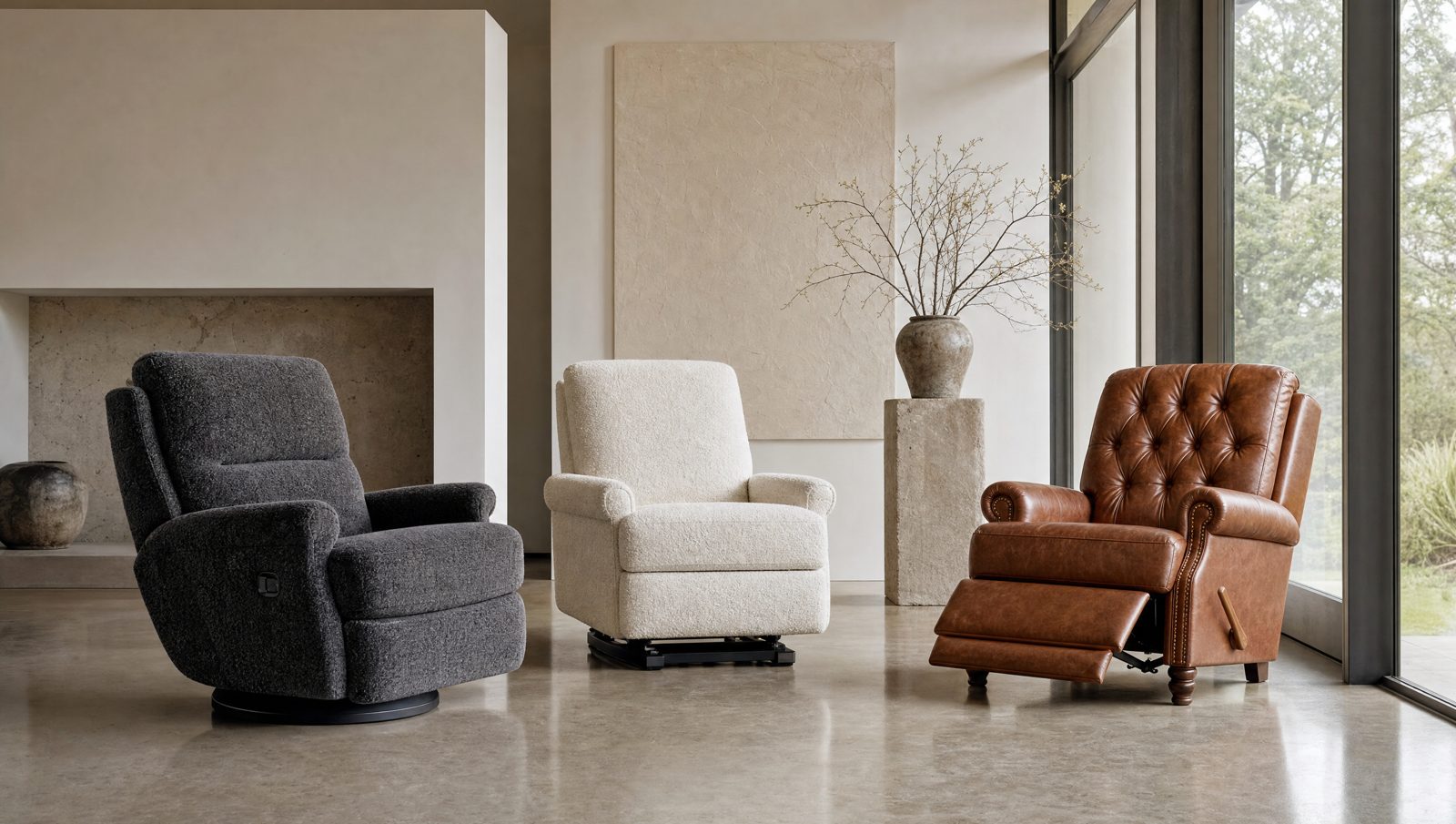
“Recliner” covers half a dozen very different mechanisms, and the one you choose decides how the chair moves, how much floor it eats and how long it lasts. Here’s how they compare.
The five mechanisms, side by side
| Type | How it moves | Space behind | Best for | Watch out for |
|---|---|---|---|---|
| Standard (push-back or lever) | Back tilts, footrest extends | ~12–24 in. | Living rooms, value | Needs space from the wall |
| Wall hugger | Seat slides forward as it reclines | ~4–6 in. | Small rooms, RVs | Usually no rock or swivel |
| Swivel rocker | 360° turn + rocking base | ~18 in. typical | Open rooms, conversation, nurseries | Can’t sit flush to a wall |
| Glider | Slides back and forth on a track | Varies | Nurseries, quiet motion | Track can squeak over time |
| Power / power lift | Motor reclines; lift tilts you up to stand | Varies (often wall-hugger) | Limited strength or mobility | Needs an outlet; more parts |
Swivel rocker recliners: the most versatile
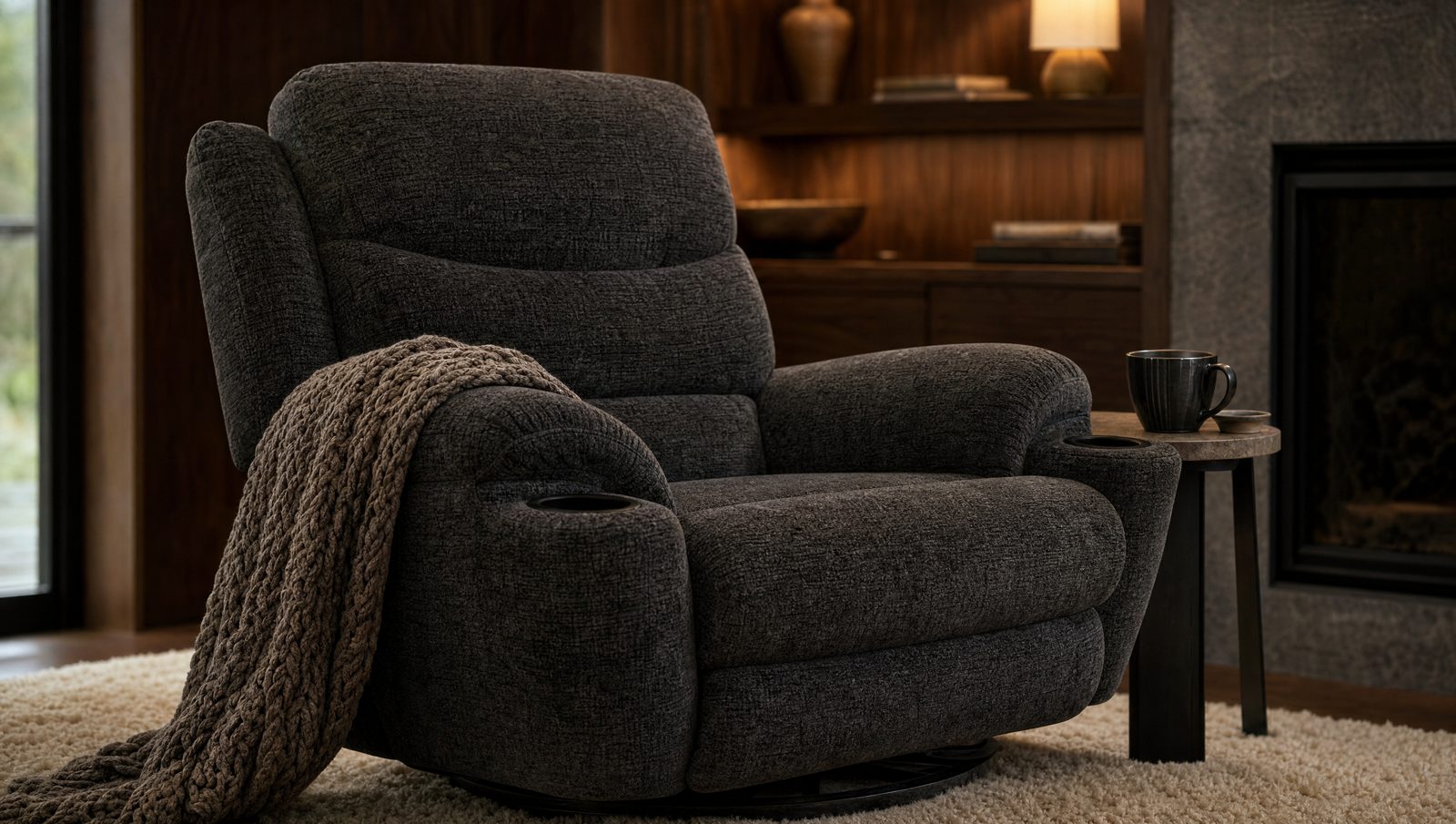
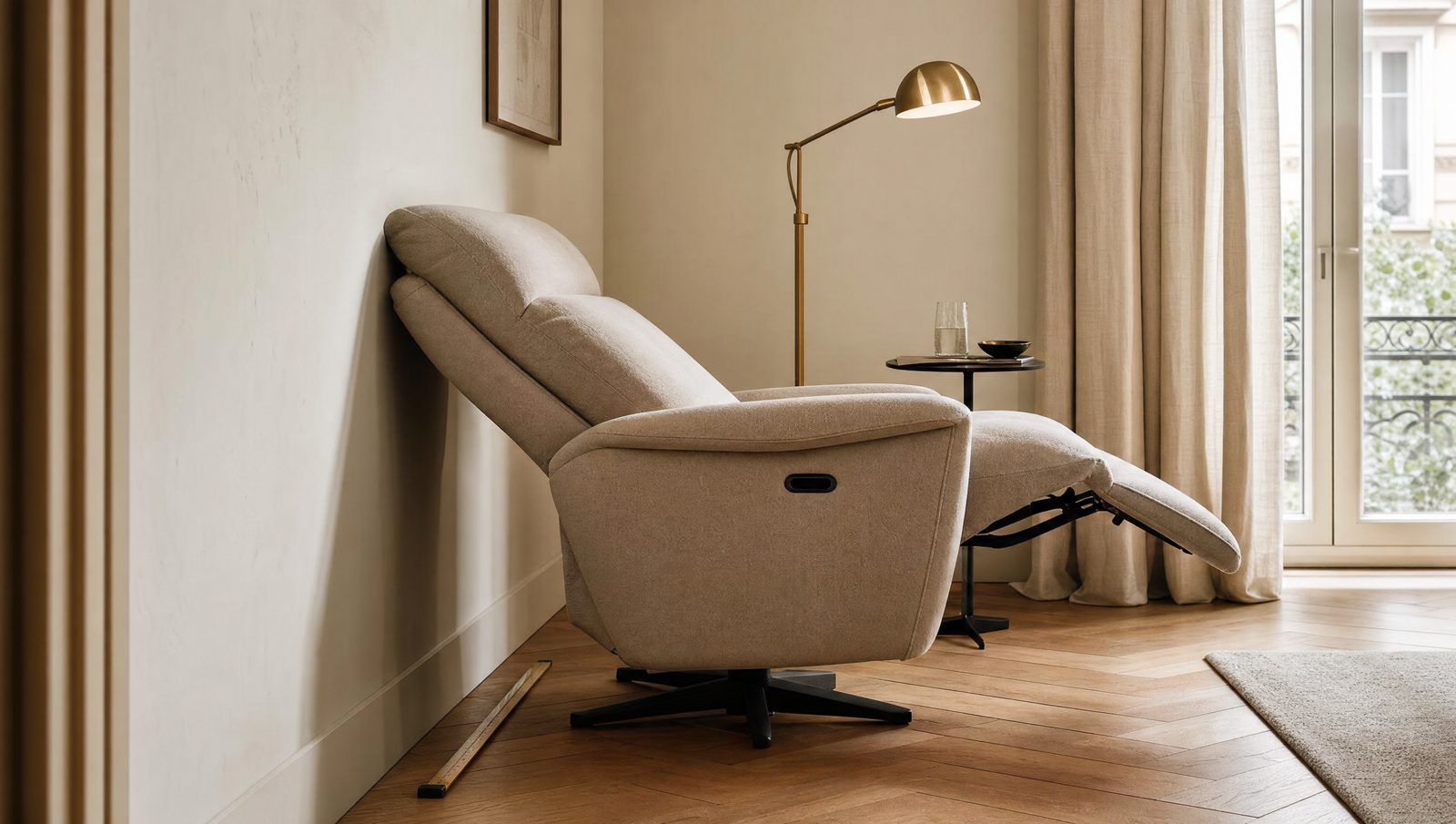
A swivel rocker sits on a round steel base that both turns and rocks. You can face the TV, then turn to the room, and the gentle rock is calming, which is why swivel rockers dominate nursery and family-room lists. The trade-off is space: the chair needs room behind it to turn and recline. Our top-rated pick, the Korser 360° Swivel Rocker, adds a 30° rock, lumbar heat and a 385 lb rating.
Gliders: smoothest motion
A glider moves along a fixed track rather than rocking on a curve, so the motion is flatter and quieter. That’s ideal for rocking a baby to sleep. Many “glider recliners” combine both. The downside is the track and bearings, which can loosen or squeak over the years.
Standard and wall-hugger recliners: the space savers
If you don’t need to turn or rock, a fixed-base recliner gives you the most chair per dollar. A wall hugger is the smart version for tight rooms. See the clearance math in how much space a recliner needs.
Power and lift: comfort that’s also accessibility
A power recliner reclines at the press of a button and stops at any angle. A power lift recliner also tilts forward to help you stand, which can make a real difference for people with knee, hip or balance issues. Consider one if pushing back a manual chair takes noticeable effort, a common complaint about large manual recliners.
Our verdict
For most living rooms with space to spare, a swivel rocker recliner is the most enjoyable everyday chair. For small rooms, buy a wall hugger. For anyone who struggles to stand, buy a lift chair. Then check the fit with our fit calculator.
Frequently asked questions
Is a glider or a rocker better?
A glider moves on a flat track and feels smoother and quieter. A rocker moves on a curved base and gives a more traditional rocking motion. Both work well in nurseries; gliders tend to be quieter, rockers simpler.
Are swivel rocker recliners durable?
They can be. Look for a steel swivel base, a high weight rating (350 lb or more is a good sign) and a solid wood or metal frame. The swivel and rocking springs are the parts that wear, so check the warranty.
Does a swivel recliner need space behind it?
Yes. Plan on about a foot and a half, because the chair must clear the wall both when it turns and when it reclines.
As an Amazon Associate we earn from qualifying purchases. This doesn’t change our rankings. We rank products using published specifications and owner feedback; see how we rank.